
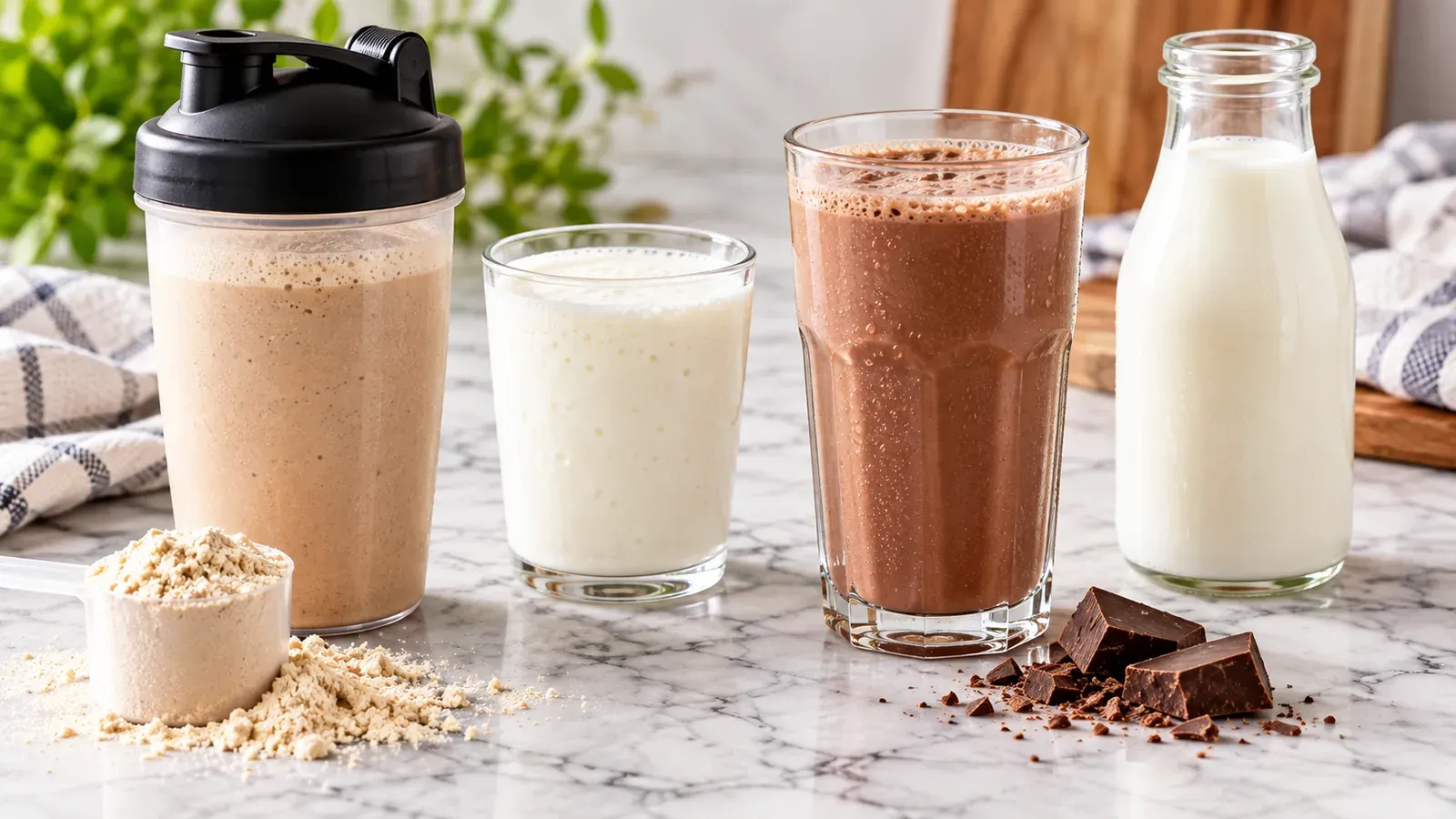
High-Protein Drinks: A Real List
What actually carries real protein in a drink, not a marketing claim. Numbers below are per typical serving, from USDA FoodData Central.
The list
| Drink | Serving | Protein | Calories |
|---|---|---|---|
| Whey protein powder, mixed with water | 1 scoop | 17 to 25g | 110 to 115 |
| Kefir, plain lowfat | 1 cup | about 9g | 105 |
| Chocolate milk, lowfat | 1 cup | about 9g | 160 |
| Whole milk | 1 cup | about 8g | 150 |
| 2% milk | 1 cup | about 8g | 120 |
| Skim milk | 1 cup | about 8g | 85 |
Whey shows a range because USDA’s two whey entries differ that much, and commercial powders vary by scoop size and formula too, so the label on your tub is the number that counts.
Milk’s protein number barely moves with fat content: whole, 2%, and skim all land within a gram of each other per cup, since removing fat doesn’t remove protein. The calories are what change, from about 85 for skim to about 150 for whole.
Bone broth carries real protein too, but the number swings enormously by brand and preparation, more than most items on this list, so I’m not comfortable citing one figure. Check the label if it needs to hit a specific target.
From the recipe box
For a full drink recipe rather than a single ingredient, the smoothie here is built on Greek yogurt, milk, and protein powder stacked together, which is how most high-protein drinks actually get built: two or three of the items above combined, not one doing all the work.
FAQ
Does whole milk have more protein than skim or 2% milk?
Barely any difference. All three land around 8g protein per cup, since removing fat doesn’t remove protein. Fat content changes calories and texture, not the protein number.
Is bone broth actually high in protein?
It depends entirely on the brand and how it’s made, more than almost anything else on this list. Some carry a real protein number close to a protein shake, others are much closer to a flavored broth. Check the label rather than assuming.
What’s the fastest way to add protein to a drink?
A scoop of whey or plant protein powder, usually somewhere between 17 and 25g of protein depending on the product, mixed into water or milk. It’s the most predictable option on this list once you know your tub’s number, since it’s a labeled amount rather than something that varies by preparation.
For the full reference list across every food type, see Foods High in Protein.
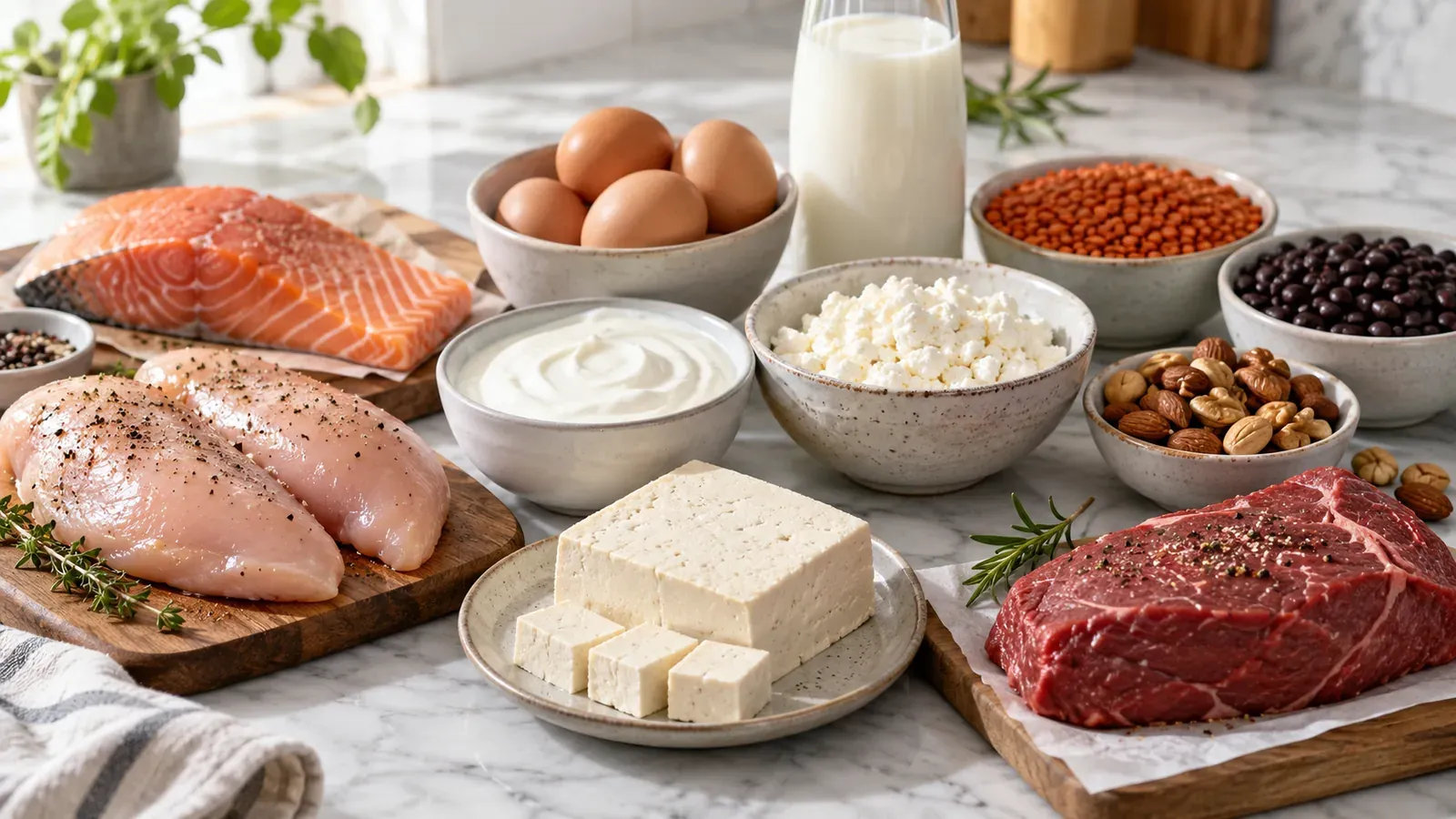
Foods High in Protein: A Real Reference List
Protein, calories, and protein per 100 calories for 44 foods high in protein, grouped by type and calculated from USDA FoodData Central. Not a guess.
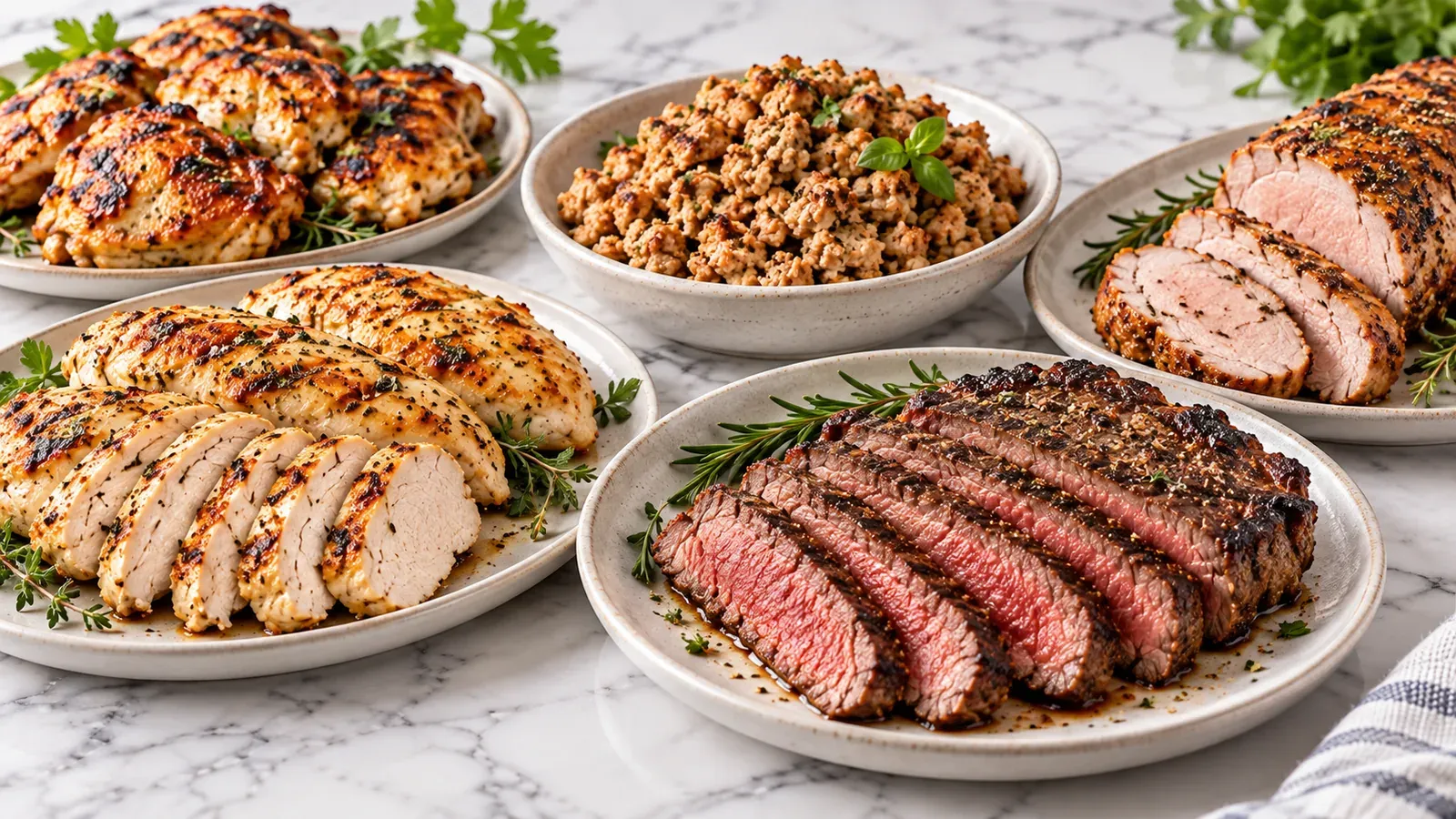
High-Protein Meats: Every Cut, Compared
Protein per serving for the actual cuts of chicken, turkey, beef, and pork people cook with, sourced from USDA FoodData Central.
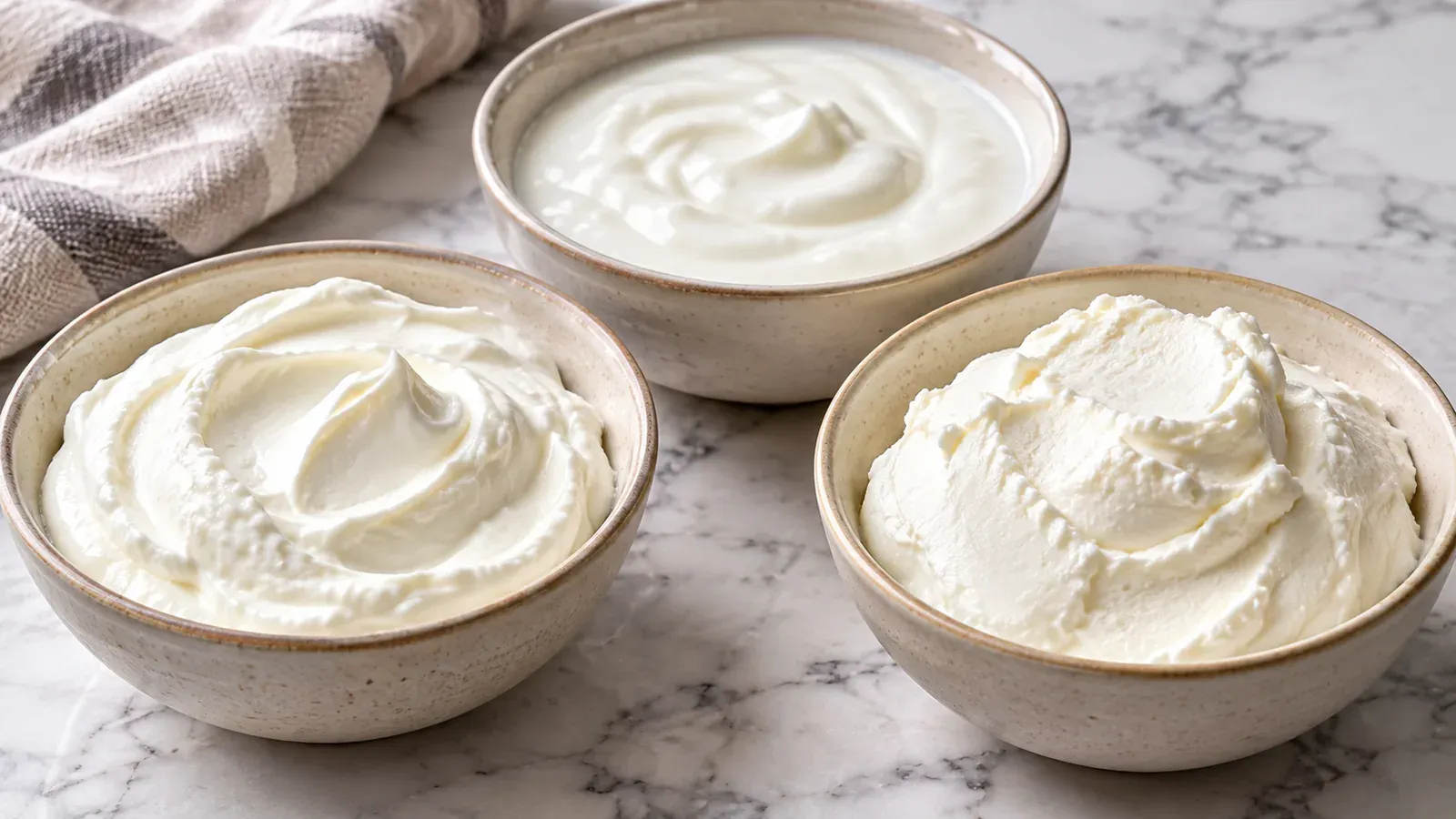
High-Protein Yogurt: 9 Brands Compared by the Label
Protein, calories, and added sugar for 11 high-protein yogurts from 9 brands, taken from each brand's own nutrition label and compared per 100g so cup size doesn't skew it.