
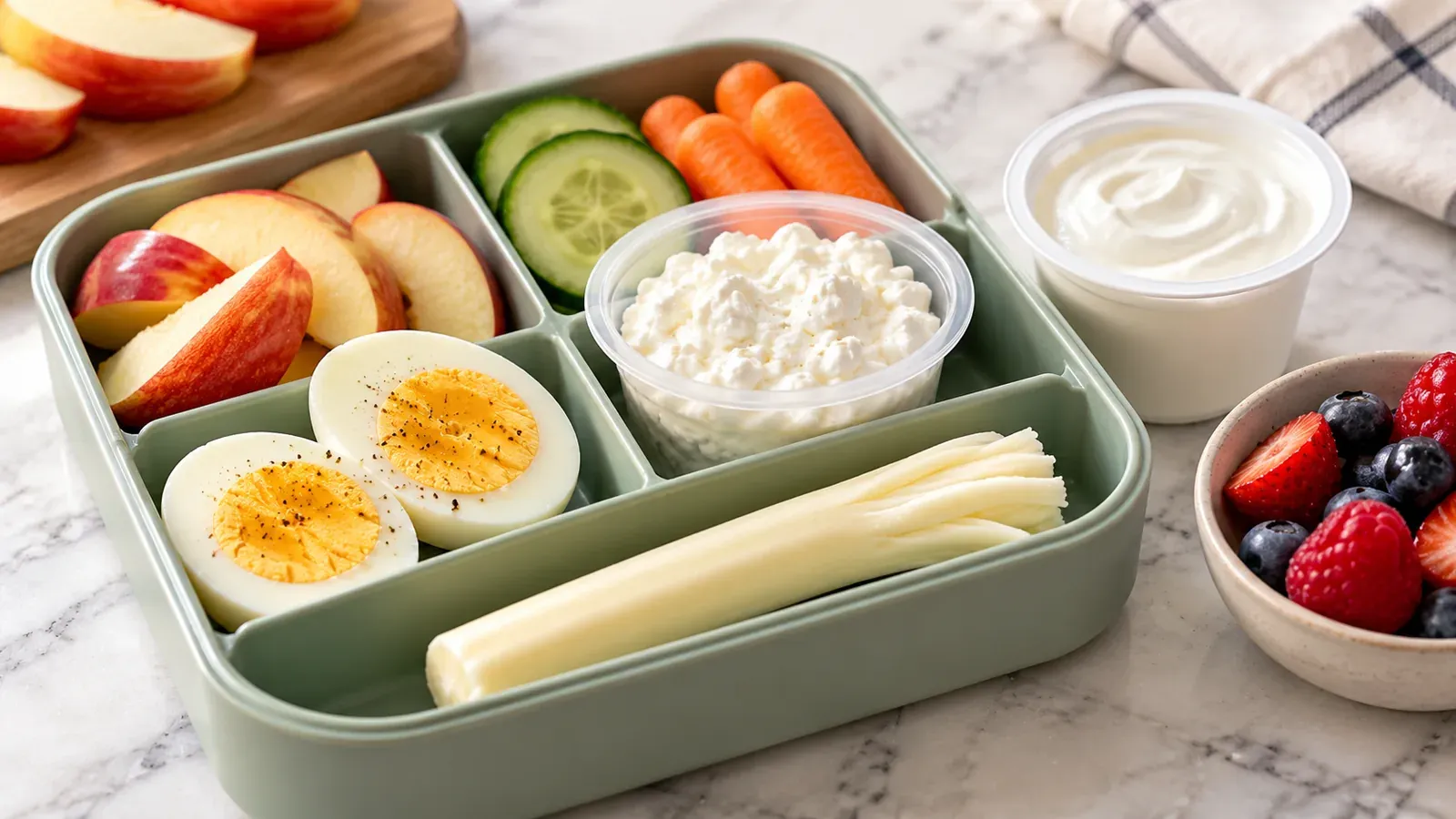
High-Protein Snacks for Kids
The same foods that work for an adult high-protein snack work for a kid’s snack. The main differences are portion size, how much mess is involved, and a few safety questions that don’t come up for adults: what has to stay cold in a lunchbox, what’s a choking risk for younger kids, and what’s allowed in a nut-free classroom. Everything below is a smaller, more portable version of what’s on the full snacks list, with numbers from USDA FoodData Central.
Grab-and-go options
These are listed in small units that are easy to combine, not as a recommended portion. A string cheese and an ounce of deli turkey together land around 11 to 13g, for example.
| Snack | Amount | Protein | Calories |
|---|---|---|---|
| Cottage cheese, 4% | 1/2 cup | 13g | 110 |
| Greek yogurt, plain nonfat | 4 oz | 12g | 65 |
| Edamame, shelled | 1/2 cup | 9g | 95 |
| Milk, 2% | 1 cup | 8g | 120 |
| String cheese | 1 stick | 7g | 85 |
| Hard-boiled egg | 1 large | 6g | 80 |
| Cheddar cubes | 1 oz | 6g | 115 |
| Deli turkey, rolled | 1 oz | 4 to 6g | 30 |
| Peanut butter | 1 tablespoon | 4g | 95 |
| Sunflower seed butter | 1 tablespoon | 3g | 100 |
| Hummus | 2 tablespoons | 2g | 70 |
Cottage cheese and Greek yogurt carry the most protein for their size. Both come in single-serve cups, which saves a step.
String cheese and eggs are the easiest to hand over: no container, no spoon, and an egg can be peeled ahead of time.
Deli turkey varies more by brand than anything else here, 4 to 6g an ounce across the two USDA entries I checked, so the package is worth a look.
Hummus is the lowest on the list. USDA’s generic commercial hummus entry carries about 2g of protein in 2 tablespoons, so it works better as a dip for something else than as the protein itself. Brands vary, so check the label on yours.
Yogurt: check which kind it is
Plain Greek yogurt and fruit yogurt are far apart on protein. Per 4 oz, USDA’s plain nonfat Greek yogurt entry carries about 12g of protein, 65 calories, and 4g of carbs. Its low-fat fruit yogurt entry carries about 5g of protein, 115 calories, and 21g of carbs for the same weight. If a kid’s yogurt cup or tube is flavored, the protein number on its label is the one to check, not the word “yogurt” on the front. Stirring fruit into plain Greek yogurt at home keeps the higher protein number.
Packing them for school
Most of the high-protein options on this page are perishable. USDA’s Food Safety and Inspection Service guidance on bag lunches covers the numbers:
- Perishable food shouldn’t sit at room temperature for more than 2 hours, or 1 hour above 90°F.
- Pack at least two cold sources with perishable food: two frozen gel packs, or one gel pack plus a frozen juice box or frozen water bottle. Put them above and below the food.
- Insulated, soft-sided lunch bags are the best option for keeping food cold.
By that guidance, eggs, yogurt, cottage cheese, deli meat, milk, and any cheese that isn’t a hard cheese, string cheese included, need the cold sources. Peanut butter, hard cheese, and canned meat or fish are on its list of foods that don’t need refrigeration.
For younger kids: choking hazards
For babies and toddlers still learning to chew, the CDC’s list of choking hazards includes several foods on this page:
- Large chunks of cheese, especially string cheese
- Whole or chopped nuts and seeds
- Chunks or spoonfuls of nut and seed butters, including peanut butter
- Tough or large chunks of meat
- Hot dogs, meat sticks, and sausages
- Whole beans, which would include whole edamame
The CDC’s advice is to prepare food in the right shape, size, and texture for your child’s development, have them sit up while eating, and watch them the whole time they eat. When a food on this list is fine for your child, and in what form, is a question for your pediatrician.
Allergies and nut-free classrooms
Milk, eggs, peanuts, tree nuts, and soy are all among the nine leading causes of food allergies in the US, per USDA, along with fish, shellfish, wheat, and sesame. That covers most of the high-protein snacks on this page. Edamame is soy.
If your kid’s school is nut-free, sunflower seed butter is the usual peanut butter swap. It carries about 3g of protein per tablespoon against peanut butter’s 4g, at about the same calories. Check the school’s policy before sending it, since nut-free rules differ from school to school.
From the recipe box
A few recipes on this site fit here directly. They stick to flavors most kids already know, skip anything unusual in the ingredient list, and still carry a real protein number. The numbers are per adult serving as written in each recipe.
- Cottage cheese bowl: 21g protein per bowl
- High-protein pancakes: 15g protein per 2 pancakes
- Peanut butter cookies: 11g protein per cookie
- High-protein mac and cheese: 31g protein per 1 1/2 cups, more of a meal than a snack
See everything tagged kid-friendly for more, or browse the full snacks list for other ideas to scale down.
FAQ
How much protein does a kid actually need in a snack?
I’m not going to put a number on that. Kids’ protein needs depend on age, size, and activity level, and that’s a conversation for a pediatrician, not a recipe site. What I can tell you is what’s actually in each food, listed above in small, easy-to-combine portions, so you can build whatever amount is right for your kid.
Can I mix protein powder into a kid’s snack?
Some parents do, usually blended into a smoothie or oatmeal rather than served on its own. I’d treat it the same way as any other ingredient decision for a kid, check with your pediatrician first, since dosing guidance isn’t something I’m qualified to give.
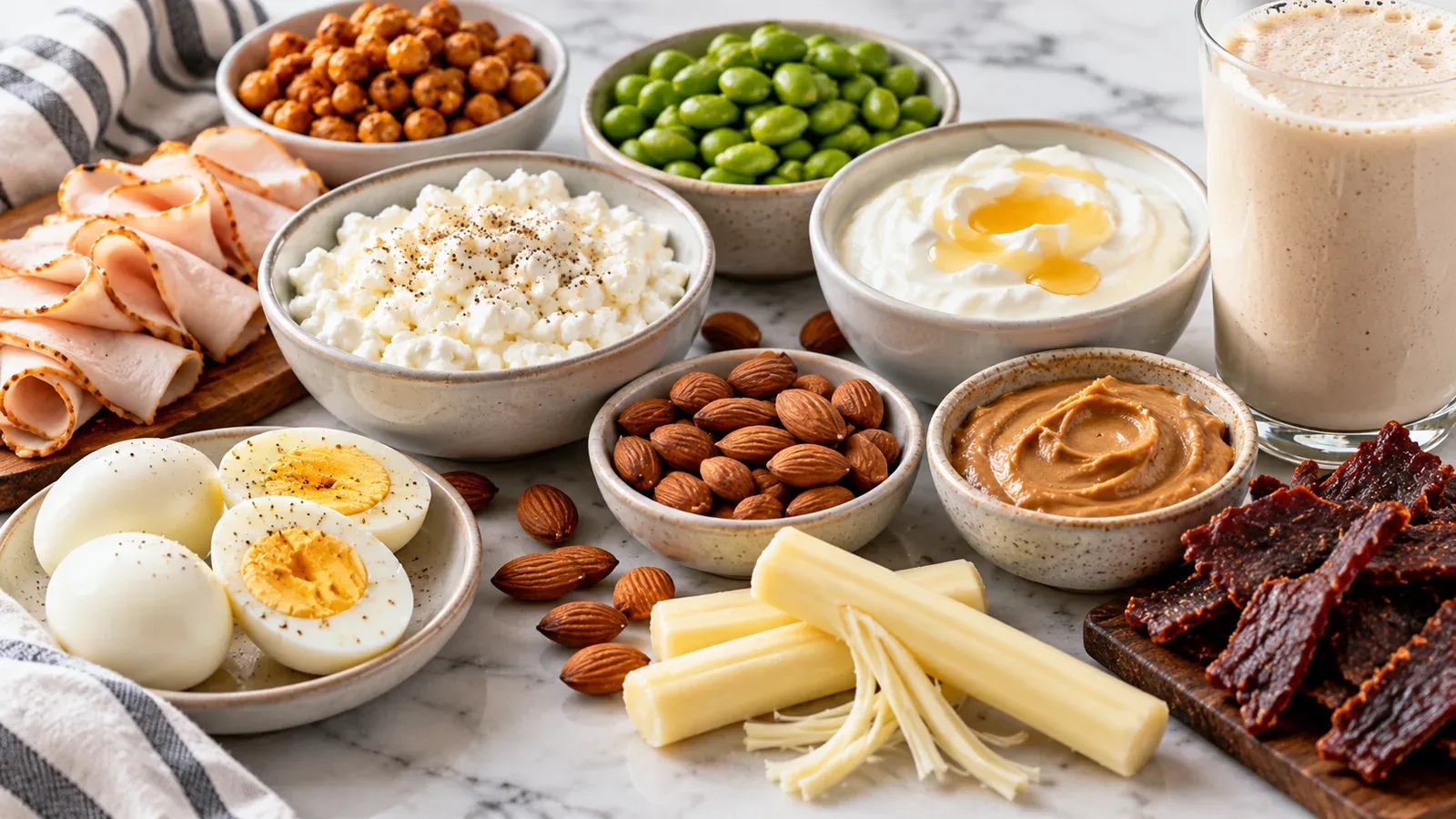
High-Protein Snacks: A Real List
Protein, calories, and sodium for 15 common high-protein snacks, sourced from USDA FoodData Central, plus which ones deliver the most protein per calorie.
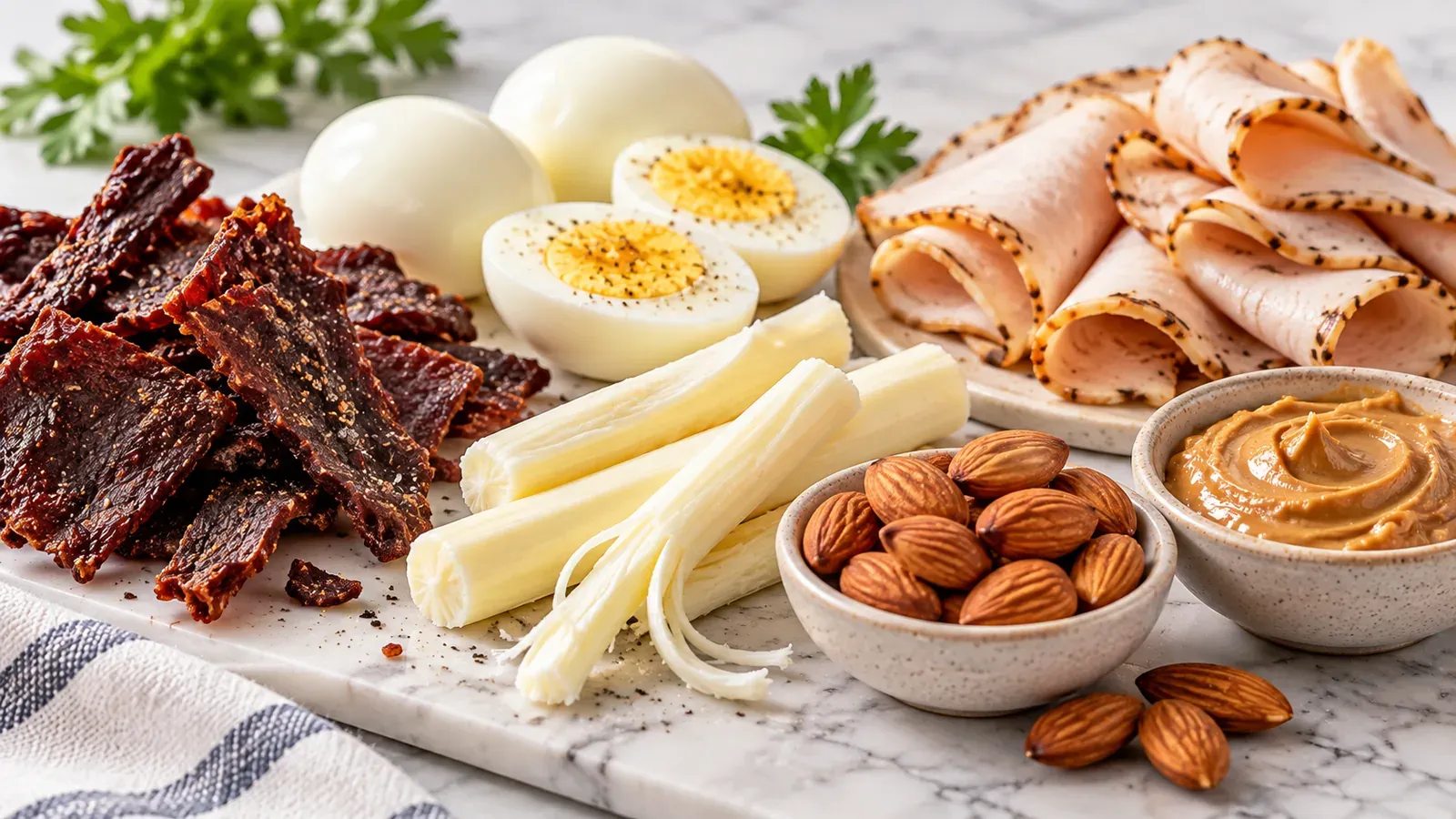
High-Protein Low-Carb Snacks
Protein, carbs, fiber, and calories for 18 low-carb snack foods, from zero-carb pork rinds and tuna to nuts, all sourced from USDA FoodData Central.
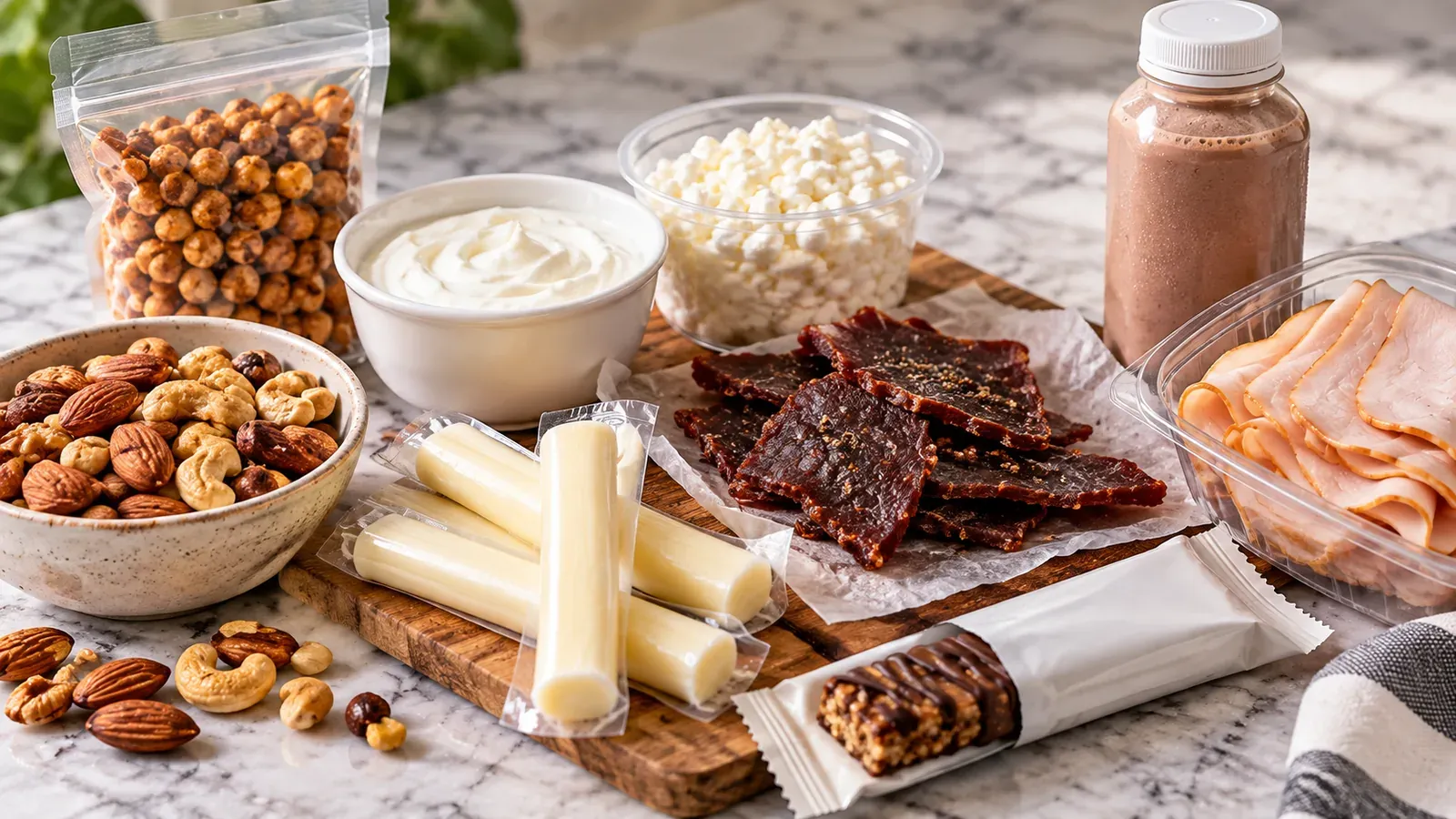
High-Protein Snacks to Buy
What to actually look for on the label when buying a high-protein snack, plus which categories reliably deliver.