
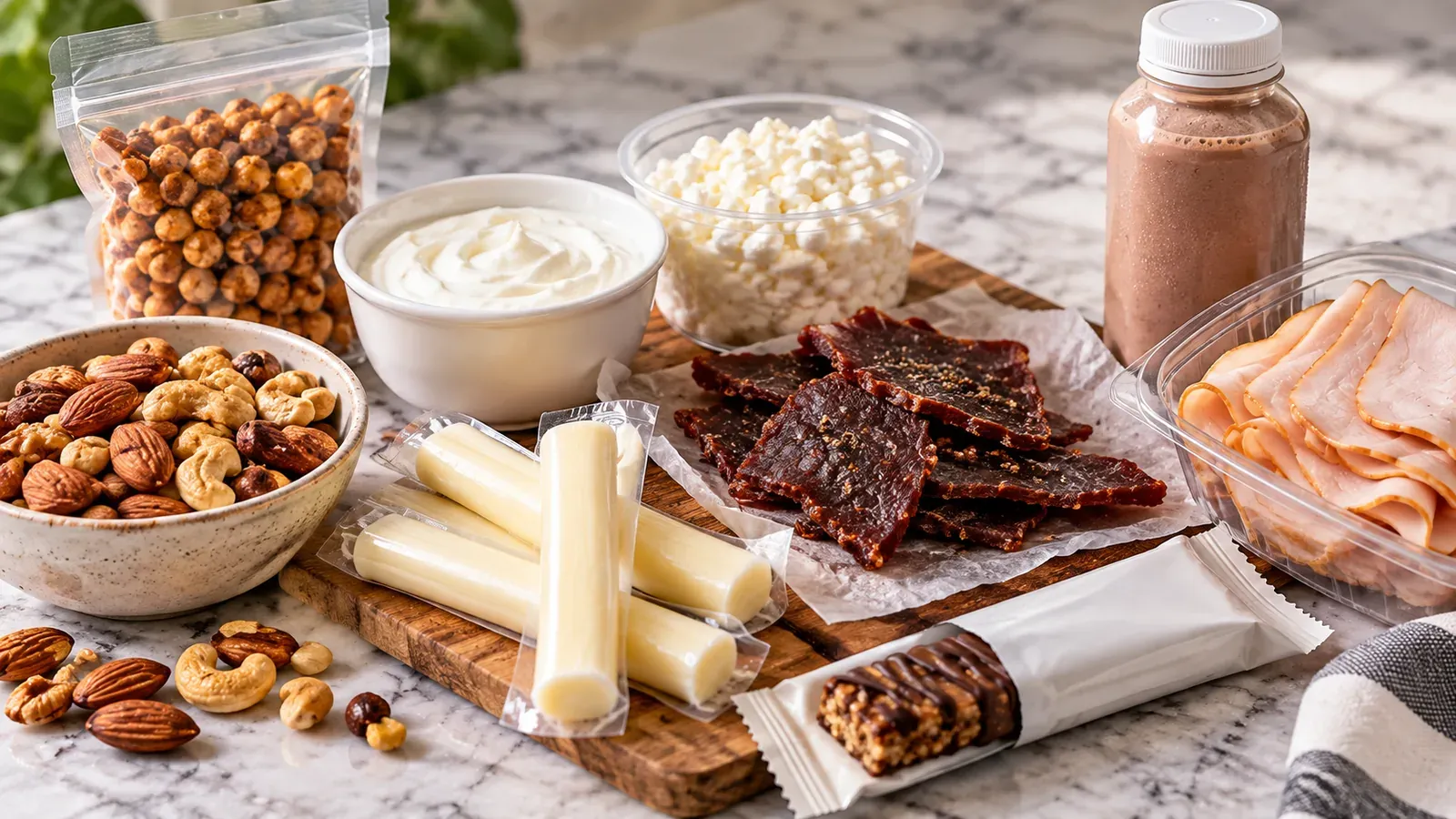
High-Protein Snacks to Buy
This isn’t a list of specific brands, I haven’t tested enough of them side by side to make that call honestly. What I can tell you is which categories of store-bought snacks reliably carry real protein, and what to actually check on the label before you buy.
Categories that reliably deliver
- String cheese and cheese snacks: a mozzarella string cheese runs about 7g protein per stick, consistent across most brands since it’s close to a single-ingredient food.
- Jerky: beef jerky runs about 9g protein per ounce. Watch the sugar content, some brands add a meaningful amount in the marinade.
- Greek yogurt, skyr, and cottage cheese cups: pre-portioned versions of foods on the full snacks list. Plain Greek and skyr cups land around 14 to 17g of protein per 5.3 oz cup, and protein-fortified lines go higher. See the yogurt brand comparison for 11 of them side by side.
- Deli meat, sliced or rolled: 8 to 12g of protein per 2 ounces across the two USDA turkey breast entries I checked, so this one is worth a look at the package.
Categories that vary a lot by brand
- Protein bars: anywhere from a genuinely solid snack to a candy bar with a protein claim. Check the actual nutrition panel every time, the front of the wrapper is marketing.
- Protein shakes and ready-to-drink options: protein, sugar, and calorie counts all swing widely between brands, so compare labels rather than front-of-bottle claims.
- Roasted chickpea snacks and flavored nut mixes: the coating or flavoring can add more sugar and carbs than the base ingredient would suggest.
What to actually check on the label
Protein grams relative to total calories is the number that matters most, not protein grams alone. After that, check added sugar: a lot of “high protein” packaged snacks make up for a thin protein number with a sweetened coating.
For more on what to actually eat, see the full snacks list and low-carb snacks.
FAQ
Are protein bars worth buying?
Some are, some aren’t, and the only way to know is the label. A bar that’s genuinely close to a real food (nuts, whey protein, dried fruit) tends to carry a fair protein number without much added sugar. A bar that reads more like a candy bar recipe with protein powder added usually looks worse the longer you look at the label.
What should I check on the label before buying a high-protein snack?
Protein grams relative to total calories is the number that actually matters, not protein grams alone. A snack with 15g protein and 150 calories is doing more work than one with 15g protein and 350 calories. After that, check added sugar, since a lot of “high protein” packaged snacks make up for a thin protein number with a sweetened coating.
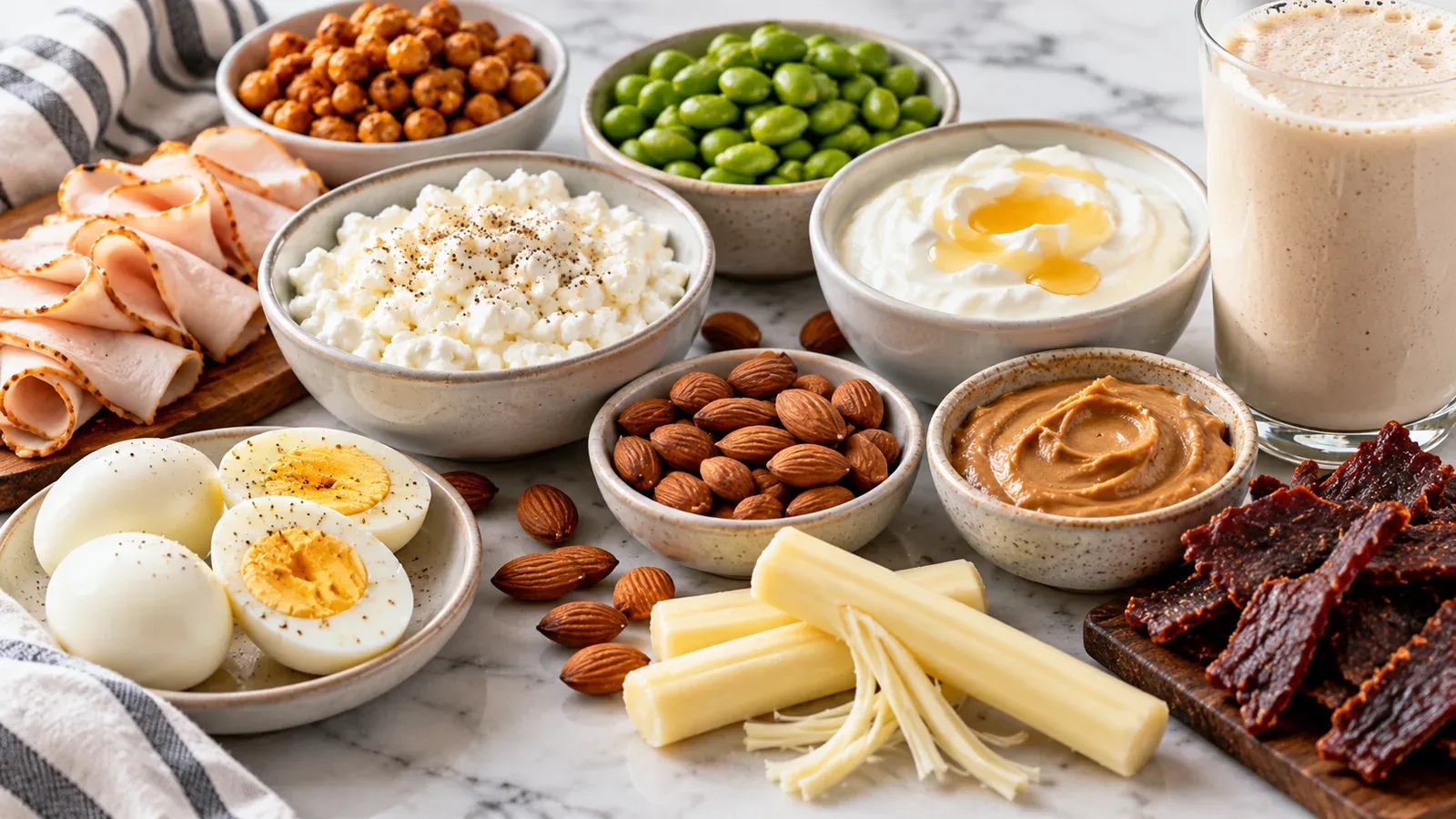
High-Protein Snacks: A Real List
Protein, calories, and sodium for 15 common high-protein snacks, sourced from USDA FoodData Central, plus which ones deliver the most protein per calorie.
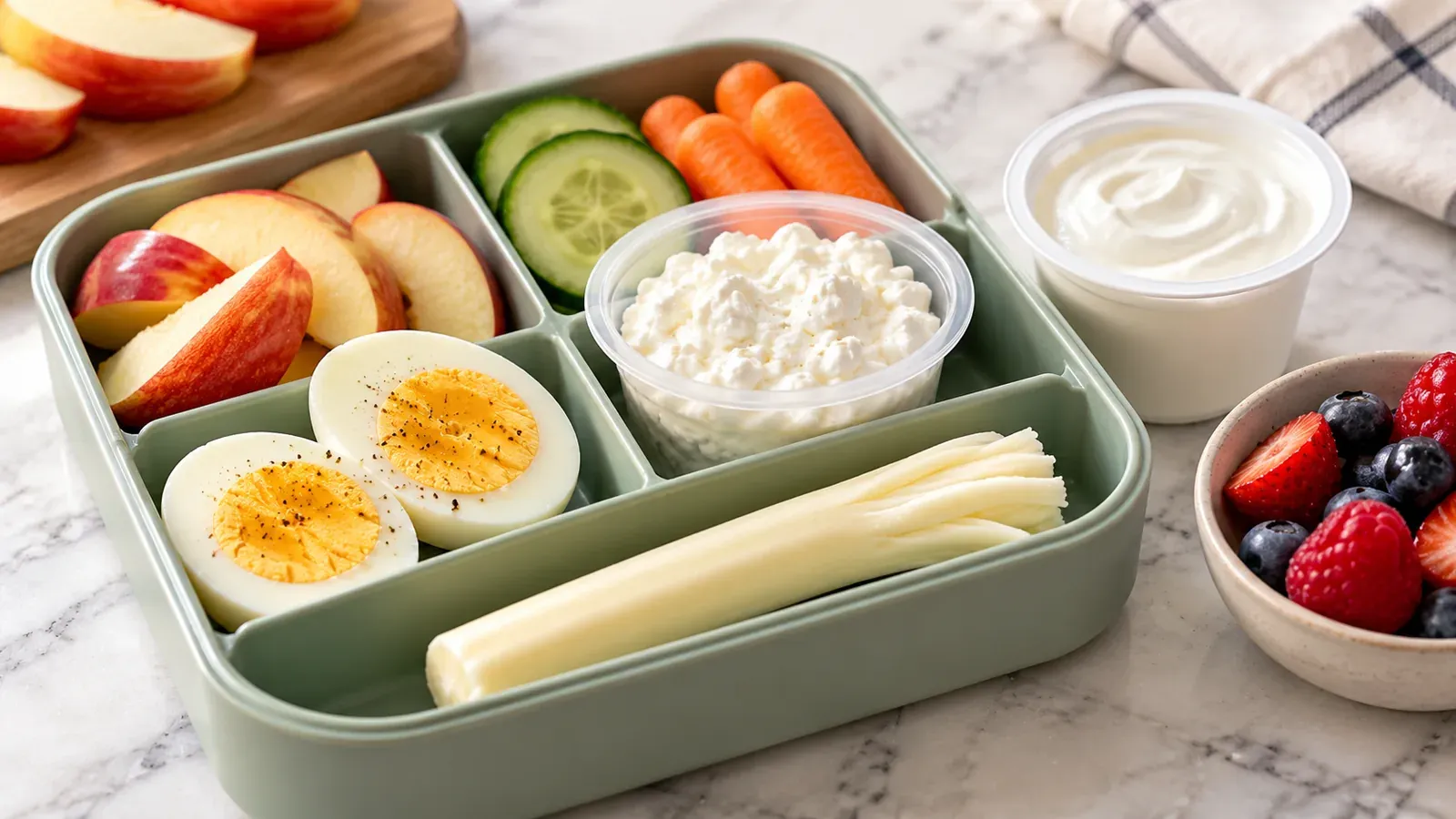
High-Protein Snacks for Kids
Protein in common kid snacks at smaller portions, from USDA data, plus what needs an ice pack, which foods the CDC flags as choking hazards, and nut-free swaps.
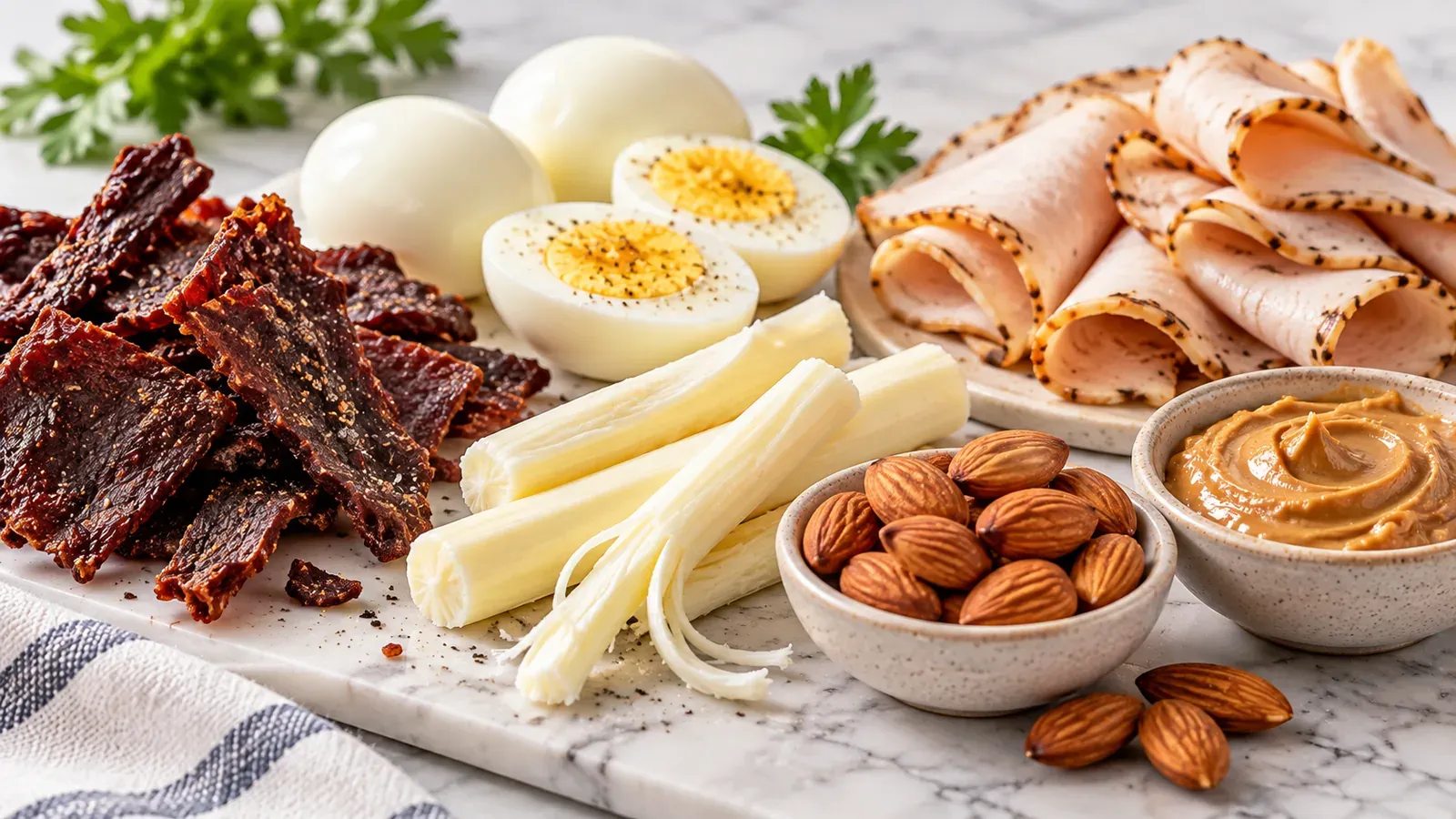
High-Protein Low-Carb Snacks
Protein, carbs, fiber, and calories for 18 low-carb snack foods, from zero-carb pork rinds and tuna to nuts, all sourced from USDA FoodData Central.