
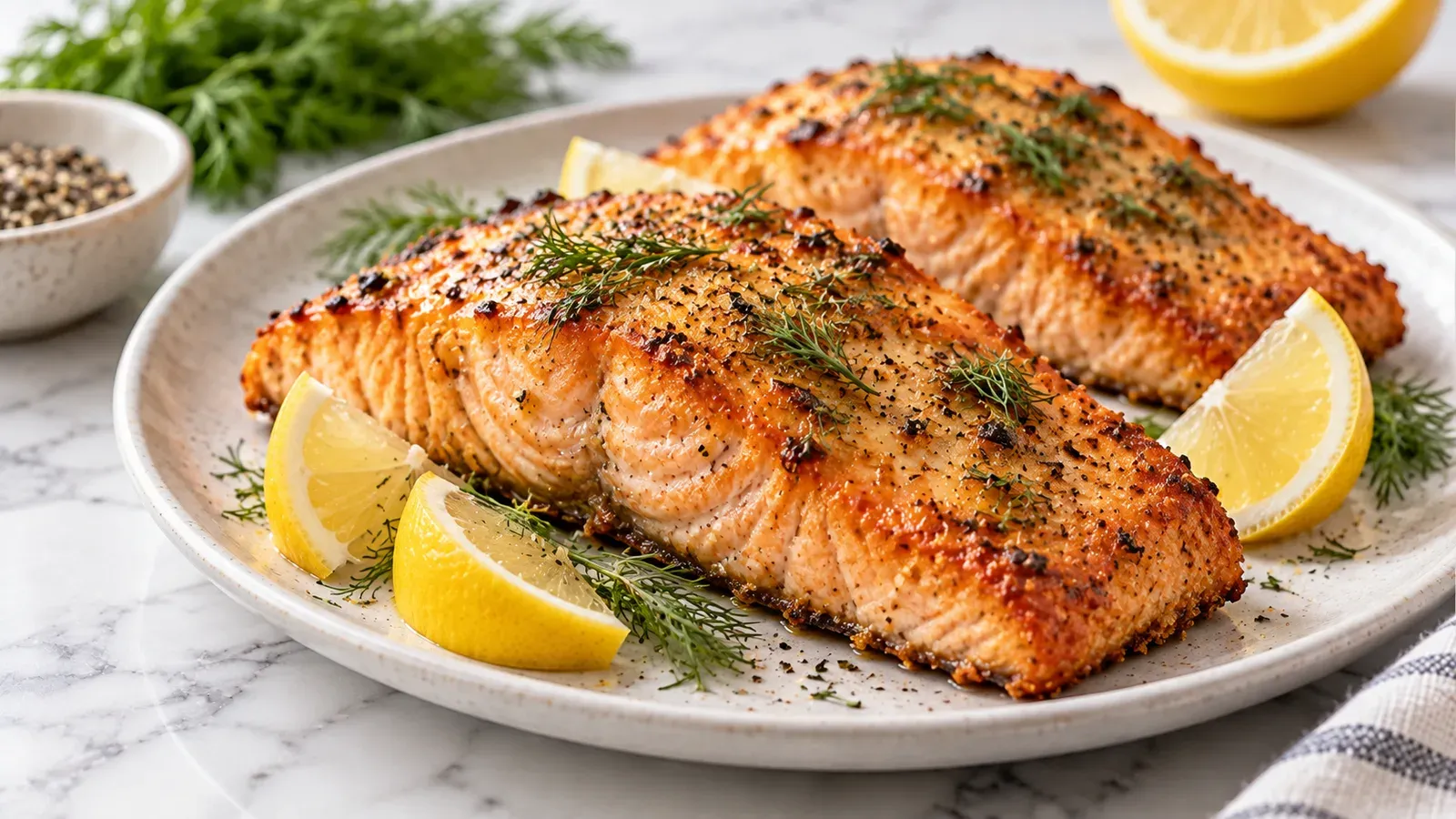
High-Protein Air Fryer Salmon
Per serving (1 fillet, about 6 oz raw)
How I calculate this → Protein calculator →
10g of protein per 100 calories, more than 14 of the other 27 dinner recipes here.
The air fryer gets salmon to a crisp exterior faster than my oven does, without heating up the whole kitchen for one pan of fish. I check for doneness with a fork rather than a timer alone, since fillet thickness varies enough between fish that the exact minute can shift. It should flake easily and look opaque all the way through, not translucent in the center.
Why you'll love this
- 30g of protein per serving with no oven preheat needed
- Ready in 20 minutes start to finish
- Crisps on the outside the way baking alone doesn't
Recipe
High-Protein Air Fryer Salmon
Ingredients
Instructions
- Preheat the air fryer to 390°F.
- Pat the salmon fillets dry. Rub with olive oil, then top with garlic, dill, lemon juice, salt, and pepper.
- Place the fillets skin-side down in the air fryer basket, in a single layer, working in batches if needed.
- Air fry for 8 to 10 minutes, until the salmon flakes easily with a fork, is opaque throughout, and reads 145°F at the thickest part.
- Serve with the lemon slices.
Equipment
- Air fryer
Notes
- I don't flip salmon in the air fryer. Skin-side down the whole time protects the delicate flesh and still crisps the top.
- Thicker fillets need closer to 10 minutes, thinner ones closer to 8. Check at the thinnest part of the fillet first since it cooks fastest.
- Air fryers vary quite a bit, especially between smaller basket models and larger oven-style ones, so I check the salmon a few minutes before the suggested time and don't crowd the basket.
Nutrition (per serving)
| Calories | 315 |
|---|---|
| Protein | 30g |
| Carbs | 1g |
| Fat | 20g |
| Fiber | 0g |
Where these numbers come from
I calculate every figure above from USDA FoodData Central, ingredient by ingredient, then divide by the servings the recipe makes. Each FDC number links to the exact USDA entry I used. How I calculate nutrition
- Salmon: FDC #175168 (Fish, salmon, Atlantic, farmed, cooked, dry heat), 22.1g protein / 206 kcal / 12.4g fat per 100g. 4 fillets raw (680g) scaled to an 80% cooked yield for fish = 544g cooked.
- Olive oil: FDC #171413 (Oil, olive, salad or cooking), 100g fat / 884 kcal per 100g, 0g protein.
- Garlic: FDC #169230 (Garlic, raw), 6.36g protein / 149 kcal / 33.1g carb / 2.1g fiber per 100g; 1 clove = 3g.
- Lemon juice: FDC #167747, half a lemon = 24g. Fresh dill: 1 tbsp (about 3g), negligible.
- Re-verified 2026-09-28: batch totals 120.8g protein, 1,255 kcal, 81.1g fat, 3.9g carb; divided by 4. Protein unchanged; lemon and garlic add about 1g carb per serving.
Storage
Refrigerate leftovers in an airtight container for up to 2 days. Reheat gently, covered, in the air fryer at 300°F for a few minutes, or eat cold over a salad the next day.
FAQ
Do I need to remove the skin first?
No. Cooking it skin-side down actually protects the fish and makes it easier to lift out cleanly. Leave the skin on for the crisp underside, and remove it after cooking if you don’t want to eat it.
How do I know when salmon is actually done?
It should flake easily with a fork and look opaque, not translucent, all the way through. On an instant-read thermometer, that’s 145°F at the thickest part, which is USDA’s safe minimum for fish.
Can I use frozen salmon?
Thaw it first for even cooking. Cooking from frozen in the air fryer tends to dry out the outside before the center catches up.
Looking for more air fryer dinners: the air fryer tofu is a plant-based option with the same hands-off method.
For how salmon compares with tuna and the rest of the seafood list, see Foods High in Protein.
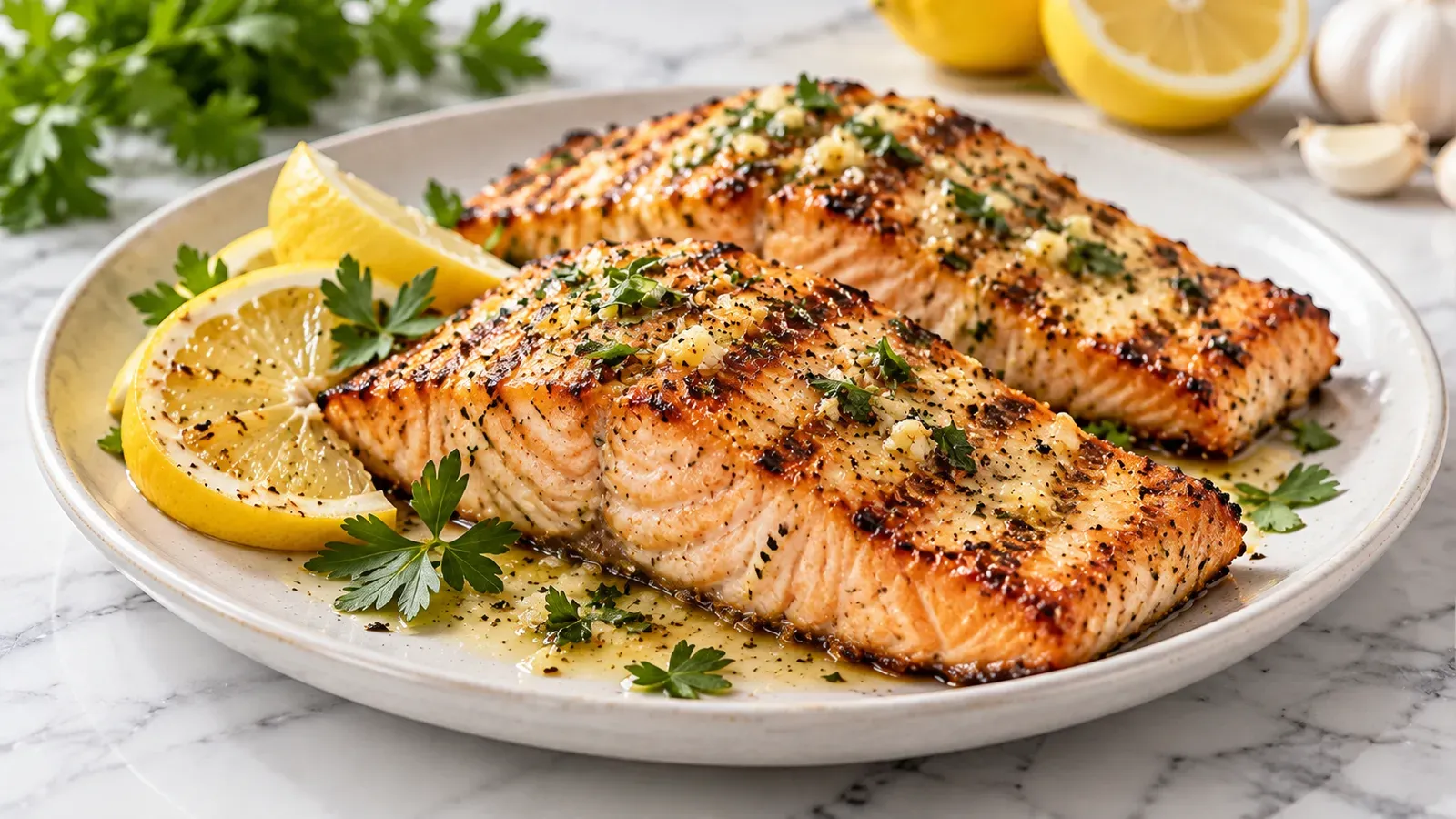
High-Protein Grilled Salmon
Simple grilled salmon with lemon and garlic: a high-protein, low-carb dinner ready in under 20 minutes.
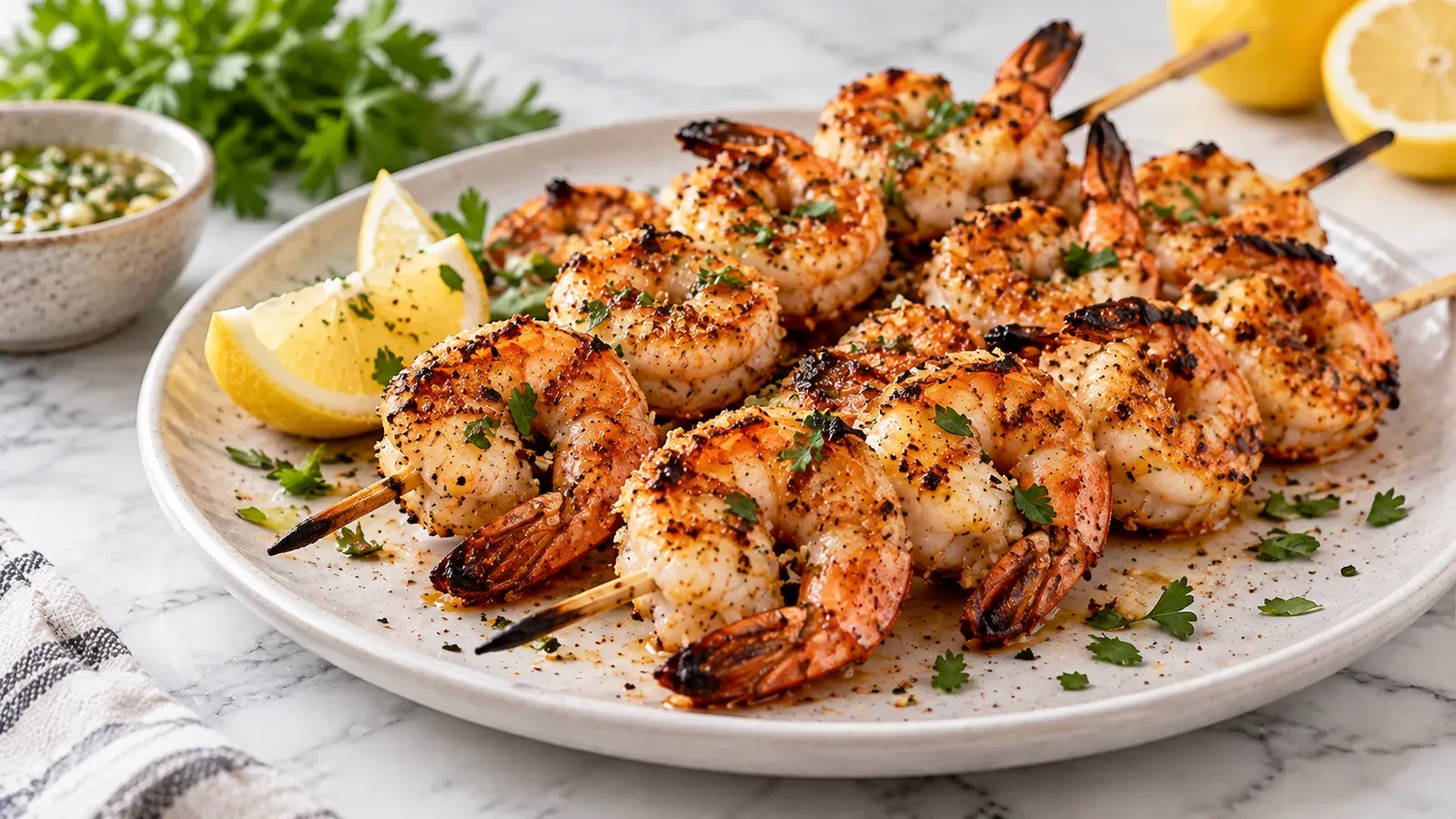
High-Protein Grilled Shrimp Skewers
Grilled shrimp skewers with garlic and lemon: a high-protein, low-carb, low-calorie dinner ready in under 25 minutes.
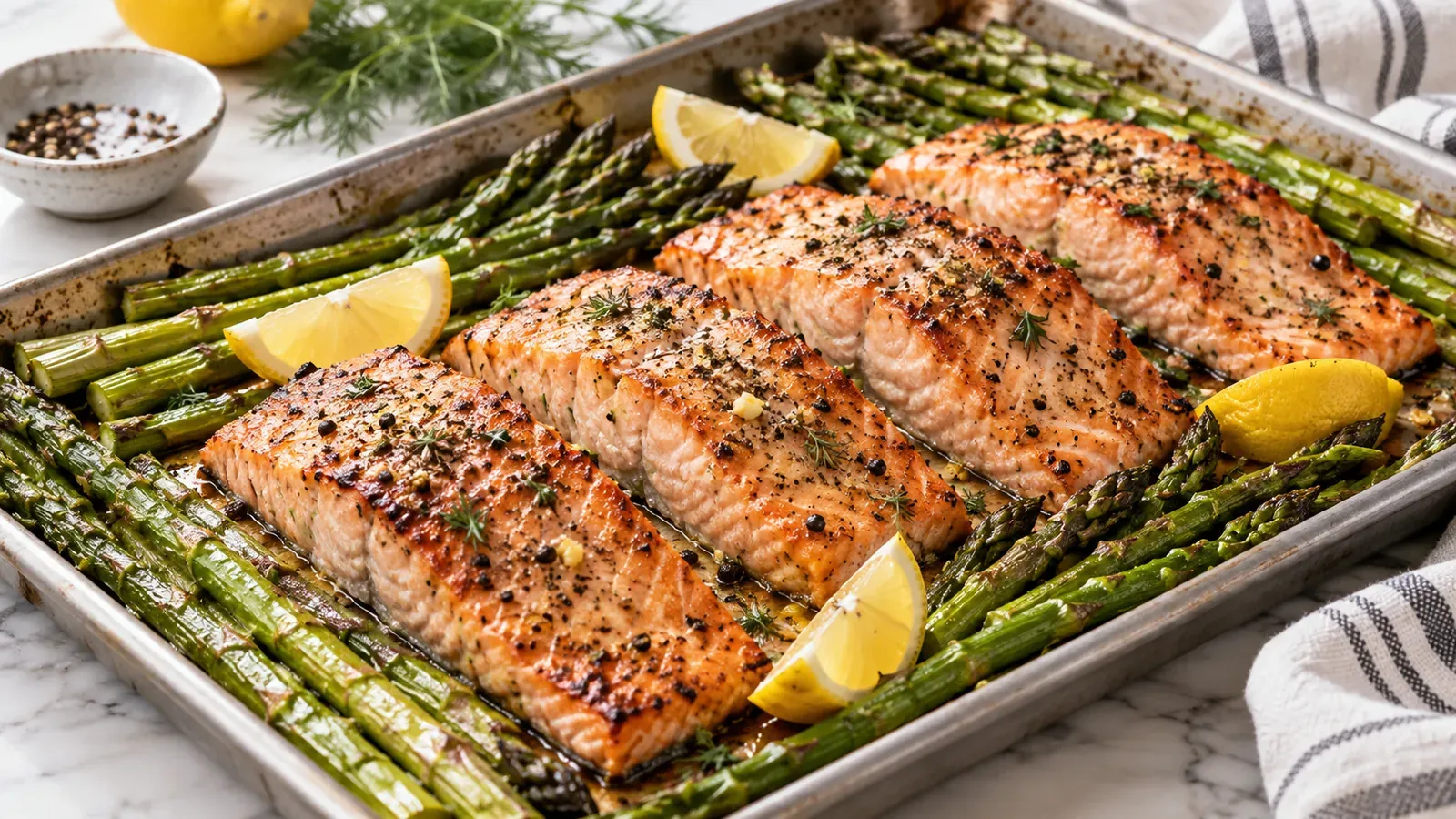
High-Protein Sheet-Pan Salmon with Asparagus
Salmon and asparagus roasted on one sheet pan at the same temperature: a high-protein, low-carb dinner with almost no cleanup.
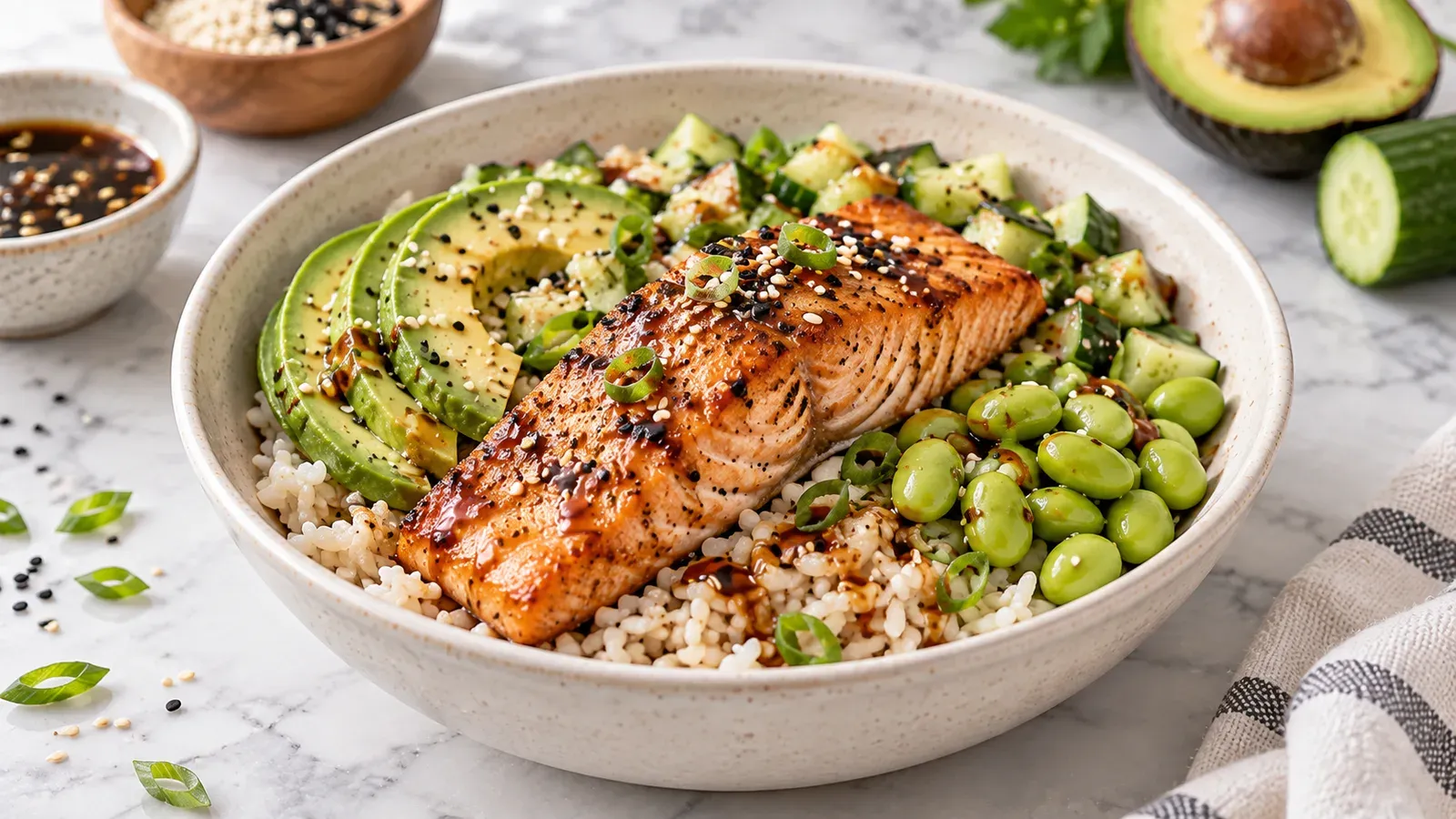
High-Protein Salmon Bowl
A high-protein salmon rice bowl with avocado, cucumber, and edamame: a high-fiber dinner with a simple soy-sesame dressing.
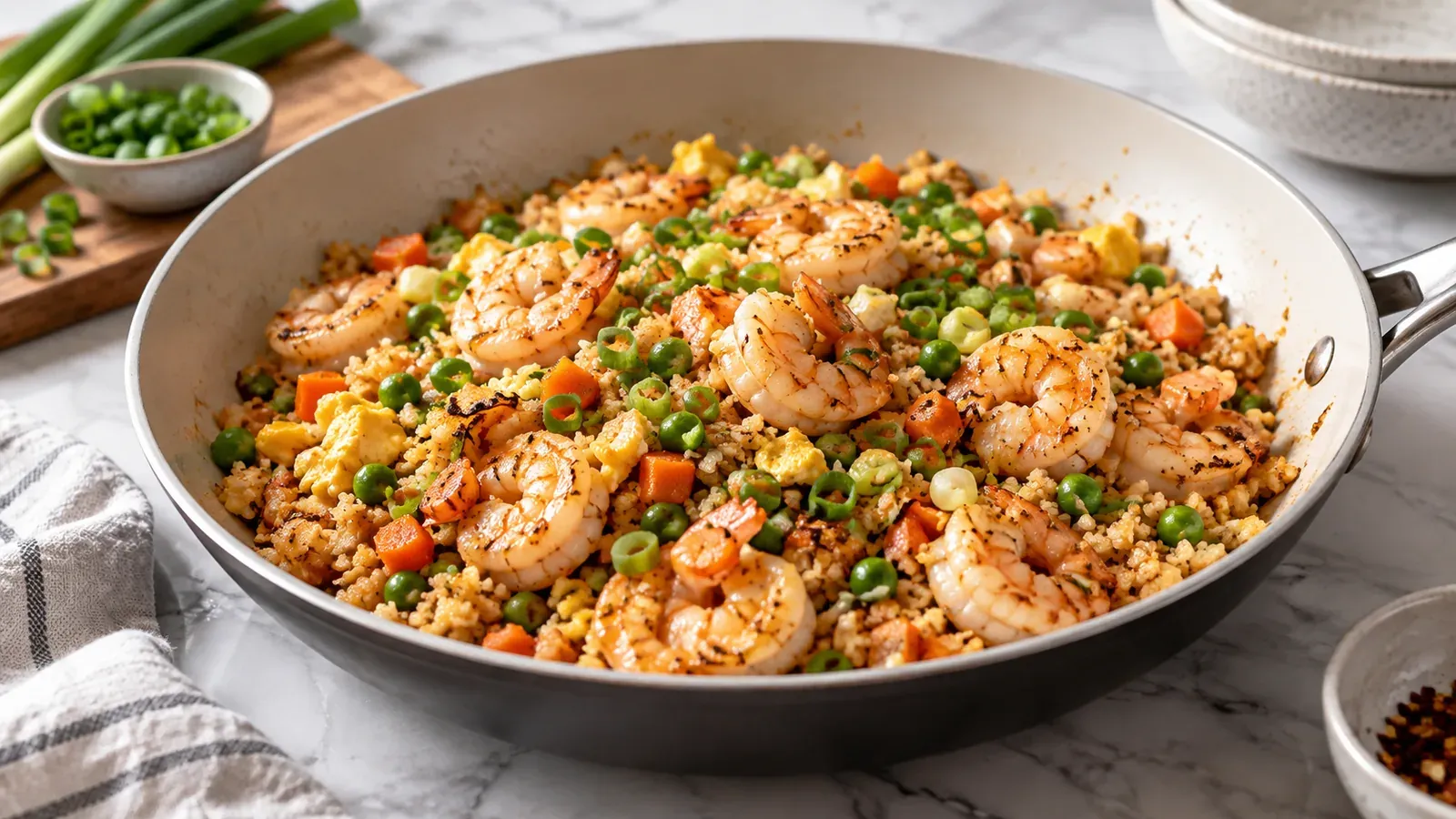
High-Protein Shrimp and Cauliflower Rice Stir-Fry
A 20-minute shrimp and cauliflower rice stir-fry with real fried-rice technique: high protein, low carb, one skillet.
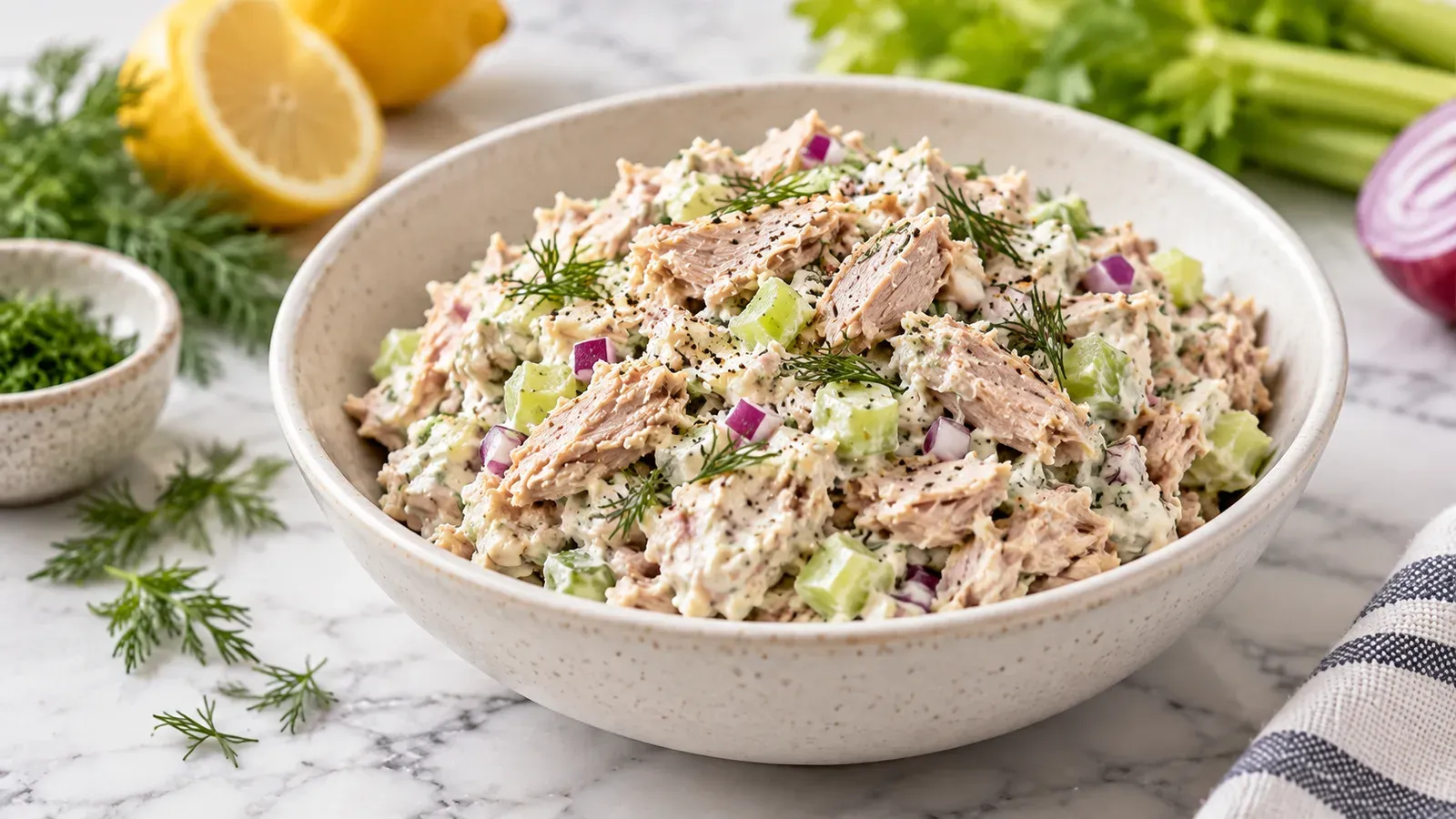
High-Protein Tuna Salad
A high-protein tuna salad made with Greek yogurt instead of mayo: no-cook, low-calorie, ready in 10 minutes.